World Refugee Day: Jeny BSG calls for action with Dance4refugees Euronews

International dance icon Jeny Bonsenge, also known as Jeny BSG, launched a dance challenge earlier this month as a call to action in support of refugees. In the run-up to World Refugee Day, she spoke to Euronews about her motivation to work with the UN High Commissioner for Refugees. 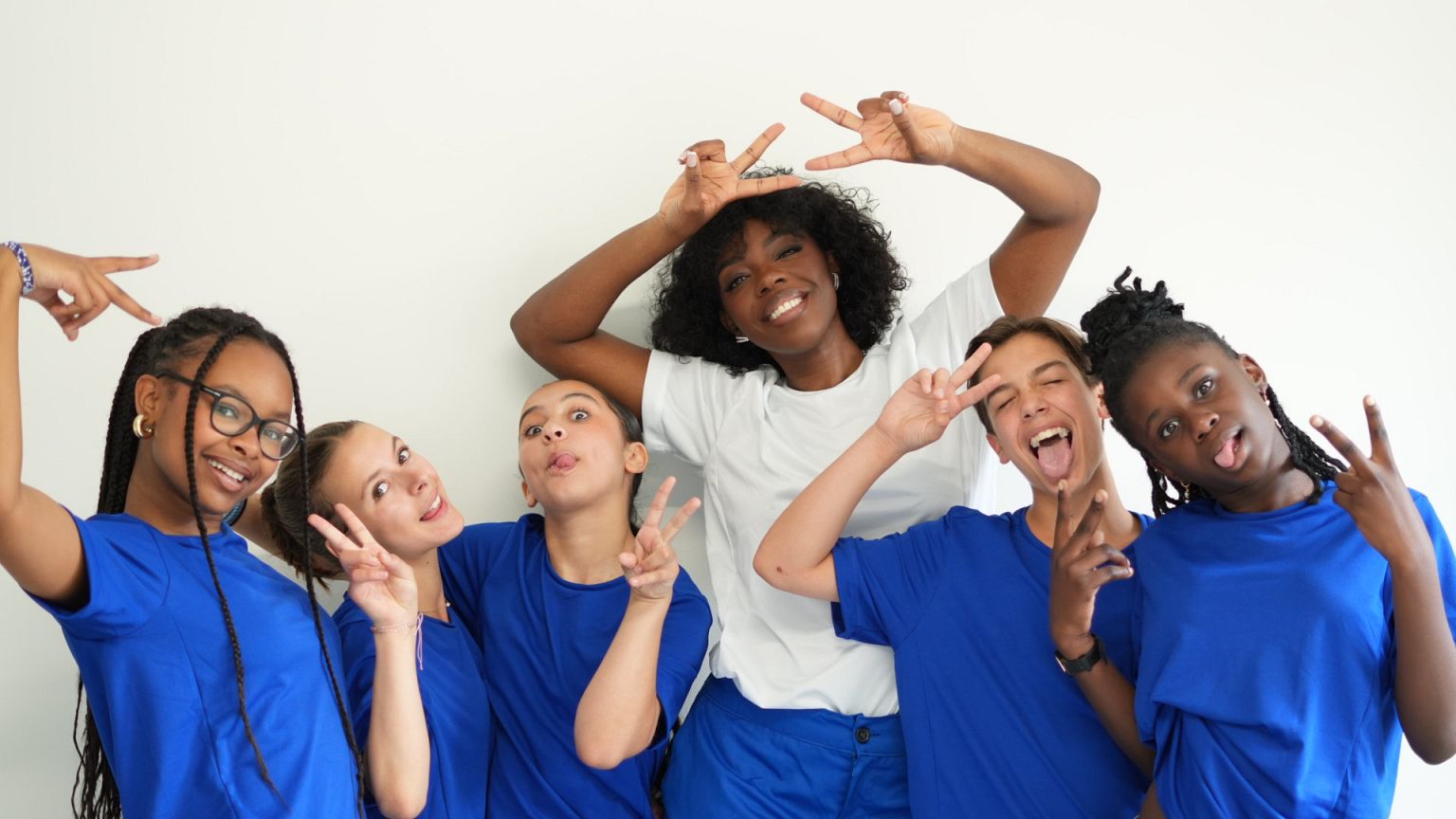 Jeny Bsg says that dance is a “universal” language to talk about refugees, a “universal” problem - Copyright Julien Maniquet Copyright Julien Maniquet
  ADVERTISEMENT
“Wake up, wake up” is the chorus of the Felix Flavour music that Jeny BSGchoreographed for the Dance4Refugees campaign on Instagram and at the Bozar arts venue in Brussels.
It’s also the call to action for people everywhere to speak out and show their support for refugees.
“Everyone needs to wake up. It’s time to talk about it, it’s time to help, it’s time to react. We can’t stay silent, we have to speak out for the oppressed and that’s what I’m doing,” she told Euronews.
Bu gönderiyi Instagram’da görJenybsg (@jenybsg)‘in paylaştığı bir gönderi
The social media campaign challenges people to post their versions of the choreography on Instagram and donate funds. It is aimed primarily at young people, who Jeny works with at her dance school and when she travels abroad.
“I try to reach out to the younger generation because for me they are the change, they can make a difference in this world. Dance was, for me, a great way to bring attention and change the narrative, to celebrate the strength, potential and resilience of refugees,” Jeny said.
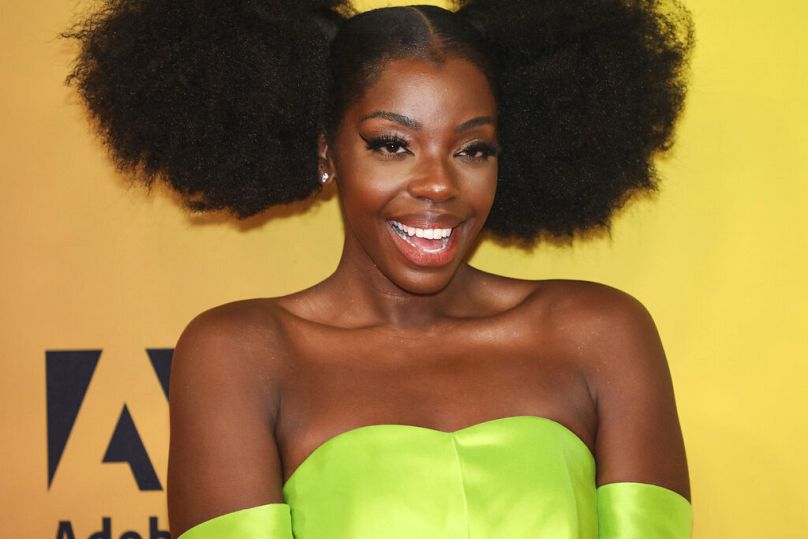 Jeny Bonsenge aka Jeny Bsg wants to “give voice” to the Congolese diaspora and all refugeesVianney Le Caer/2021 Invision
A “legacy” of the DRC conflict
The dancer and choreographer was born in Belgium, where her family sought refuge from the decades-long conflict in the Democratic Republic of Congo (DRC). A background that left its mark on the artist and led her to activism in collaboration with the UN High Commissioner for Refugees (UNHCR).
“My family fled violence in the 1990s. My elder brothers spent time in a refugee camp. My mother and my father have experienced displacement, violence, fear, struggle”, she recalls.
More than 6.9 million people are internally displaced across the DRC, with an additional one million refugees and asylum-seekers in neighbouring countries, according to the UNHCR.
This “legacy” brought additional self-imposed responsibilities for Jeny, who set herself the task of “not failing” and being a voice for the Congolese diaspora: “Today I am living proof that the origin of refugees does not define the limits of refugees, but rather their strengths.”
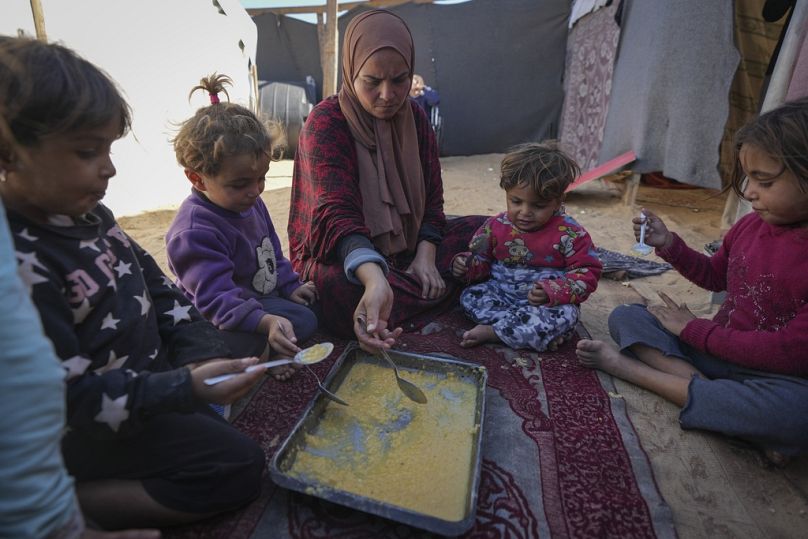 Yasmin Eid and her four daughters eat lentils at their tent in a refugee camp in Deir al-Balah, Gaza StripAbdel Kareem Hana/Copyright 2024 The AP. All rights reserved.
“They are not numbers, but lives that matter”
Jeny uses her platform to promote marginalized voices, having founded the AfroHouseBelgium, a Brussels-based dance school. She’s also been working with the UNHCR since last year to amplify the stories of those forced to flee.
“Dance is universal and the refugee cause today is also universal. We know that refugees come from all around the world: Ukraine, Afghanistan, Syria, DRC and other countries. But they are not only statistics or numbers. Their lives matter, and they are like us”, she says.
The UN says there are currently 123 million forcibly displaced people worldwide, twice more than a decade ago. Almost 37 million of them are refugees. The organisation warns that recent drastic cuts in humanitarian aid funding are putting their lives at risk.
Funding for the agency is now roughly at the same level as a decade ago, said Filippo Grandi, UN High Commissioner for Refugees, at the launch of the annual Global Trends Report on 12 June.
“We are living in a time of intense volatility in international relations, with modern warfare creating a fragile, harrowing landscape marked by acute human suffering", Grandi highlighted.
The report found that, contrary to widespread perceptions in wealthier regions, 67 per cent of refugees stay in neighbouring countries, with low and middle-income countries hosting 73 per cent of the world’s refugees.
The dancer and choreographer was born in Belgium, where her family sought refuge from the decades-long conflict in the Democratic Republic of Congo (DRC). A background that left its mark on the artist and led her to activism in collaboration with the UN High Commissioner for Refugees (UNHCR).
“My family fled violence in the 1990s. My elder brothers spent time in a refugee camp. My mother and my father have experienced displacement, violence, fear, struggle”, she recalls.
More than 6.9 million people are internally displaced across the DRC, with an additional one million refugees and asylum-seekers in neighbouring countries, according to the UNHCR.
This “legacy” brought additional self-imposed responsibilities for Jeny, who set herself the task of “not failing” and being a voice for the Congolese diaspora: “Today I am living proof that the origin of refugees does not define the limits of refugees, but rather their strengths.”
Yasmin Eid and her four daughters eat lentils at their tent in a refugee camp in Deir al-Balah, Gaza StripAbdel Kareem Hana/Copyright 2024 The AP. All rights reserved.
“They are not numbers, but lives that matter”
Jeny uses her platform to promote marginalized voices, having founded the AfroHouseBelgium, a Brussels-based dance school. She’s also been working with the UNHCR since last year to amplify the stories of those forced to flee.
“Dance is universal and the refugee cause today is also universal. We know that refugees come from all around the world: Ukraine, Afghanistan, Syria, DRC and other countries. But they are not only statistics or numbers. Their lives matter, and they are like us”, she says.
The UN says there are currently 123 million forcibly displaced people worldwide, twice more than a decade ago. Almost 37 million of them are refugees. The organisation warns that recent drastic cuts in humanitarian aid funding are putting their lives at risk.
Funding for the agency is now roughly at the same level as a decade ago, said Filippo Grandi, UN High Commissioner for Refugees, at the launch of the annual Global Trends Report on 12 June.
“We are living in a time of intense volatility in international relations, with modern warfare creating a fragile, harrowing landscape marked by acute human suffering", Grandi highlighted.
The report found that, contrary to widespread perceptions in wealthier regions, 67 per cent of refugees stay in neighbouring countries, with low and middle-income countries hosting 73 per cent of the world’s refugees.
Go to accessibility shortcuts Share this articleComments
Read more
Cinema
Oscars implement new rules for voting, AI and refugee filmmakers
Europe News
UN says refugees from Middle East crisis may try to reach Europe
Culture news
Madrid’s Puerta de Alcalá monument wins the Europa Nostra 2025 award
Cinema
Oscars implement new rules for voting, AI and refugee filmmakers
Europe News
UN says refugees from Middle East crisis may try to reach Europe
Culture news
Madrid’s Puerta de Alcalá monument wins the Europa Nostra 2025 award
- Democratic Republic of Congo
- Music
- Refugees
- Dance

The best things to do, hear, see or watch in Europe this week
The end of Squid Game: What does that major surprise cameo mean?

Glastonbury controversy: Police investigate Kneecap and Bob Vylan sets
Madrid’s Puerta de Alcalá monument wins the Europa Nostra 2025 award
Failed art restorations: intention is not the only thing that counts
1
Swada x Niczos: Discover the new twist to traditional Slavic music
2
King Charles meets giant gorilla puppet at climate reception
3
Film of the Week: ‘F1 The Movie’ - in the pits with Pitt
4
Prix Versailles unveils the most beautiful restaurants in the world
5
What are the best albums of 2025 so far?
FAQ
Can Girls Finish and Keep Going? The Truth About Multiple Orgasms
Many people wonder what happens when women “finish,” meaning reach orgasm, and whether they can continue afterward. Research shows that about 70–80% of women are capable of experiencing more than one orgasm in a single session. For example, a woman might climax once through clitoral stimulation and then, after a short moment, continue and reach another orgasm without stopping completely. One key difference between male and female bodies is the refractory period, which is the recovery time after orgasm.
Is it healthy for a woman to climax every day?
Yep, safe and normal. There is nothing medically harmful about having an orgasm.19/06/2021
What It Really Feels Like When a Girl Climaxes
When a girl reaches climax, it usually feels like a buildup and release of intense pleasure. As arousal increases, the body shows clear signs: breathing speeds up, the heart beats faster, and the skin may feel warmer or more sensitive. Many women notice a throbbing or pulsing sensation around the clitoris or opening of the vagina, along with a feeling of fullness or pressure in the lower belly. For example, some say it feels like a constant buzz that keeps getting stronger, while others describe it as a warm wave slowly rising from the pelvis upward.
How Long Does a Girl Wait for Round 2? The Shocking Truth
How Long Does a Girl Have to Wait for Round 2? The short answer: a girl doesn’t need to wait at all. Women are biologically capable of multiple orgasms in one session and typically have no refractory period, meaning they can be ready for round 2 within seconds. The Science Behind It Unlike men, who experience a refractory period—a recovery time after orgasm during which they can’t get another erection—most women do not have this biological barrier.
How a Woman Feels When She Releases: The Ultimate Guide to Female Orgasm
Here is a clearer, more reader-friendly version with added detail and examples. A woman’s experience during sexual release, often called orgasm, involves both physical sensations and emotional responses, and these can vary from person to person. Research suggests that around 70–80% of women can experience orgasm under the right conditions, though the intensity and frequency differ widely. Many describe it as a buildup of pleasure that reaches a peak and then releases, similar to pressure being lifted.
Despite their name, forced orgasms aren’t something you force on a partner
This site only collects related articles. Viewing the original, please copy and open the following link:World Refugee Day: Jeny BSG calls for action with Dance4refugees Euronews